COVID-19 Office Procedures FAQs

HomeNews2020November

Are the ADA, IDA, and CDC still recommending that dental offices follow enhanced infection control procedures? 

Yes, all of the above sources are still recommending that dental offices follow enhanced infection control procedures. As a reminder, these procedures include:

  • Practicing enhanced patient screening controls including: asking questions regarding potential COVID exposure and any COVID-like symptoms they may be experiencing.
  • Removing all toys and magazines from the waiting room
  • Blocking off waiting room chairs to encourage patients to socially distance. Or alternatively, have patients wait in their car and call office staff when they arrive to be escorted directly to the examination room.
  • Ensuring that all staff and patients wear appropriate PPE while in the building.
  • Using non-aerosol generating tools and procedures wherever possible.


View the ADA Return to Work Toolkit

 
What is the number one thing I should be doing/monitoring to keep my employees safe?

Closing the employee lounge/lunch area. These areas can be one of the most dangerous places in your office for the simple reason that it is where employees typically remove or discard their PPE at the end of the workday or while eating lunch.


COVID-19 Family Matters

HomeNews2020November

What if my employee was exposed to COVID at a family party/vacation/social event? Am I still obligated to give them COVID pay?
Employers are required to distribute COVID pay to eligible employees when exposure takes place outside of the office, regardless of location or occasion.

Am I obligated to pay my employees to stay home with their children if there is a school closure or shutdown?
Not necessarily. The Department of Labor has classified any business with less than 50 employees as a “small business” and has stated that these small businesses may be exempt from the paid and additional unpaid leave requirement if doing so would jeopardize the viability of the small business as a going concern.

Specifically, the practice must be able to certify and demonstrate any one of the following:

  • The provision of leave for that reason would cause practice business expenses to exceed revenues and cause the small business to cease operating at a minimal capacity
  • The absence of the employee(s) requesting leave would entail a substantial risk to the financial health or operational capabilities of the small business because of their specialized skills, knowledge of the business, or responsibilities
  • There are not sufficient workers who are able, willing, and qualified, and who will be available at the time and place needed, to perform the labor or services provided by the employee or employees requesting paid sick leave or expanded family and medical leave, and these labor or services are needed for the small business to operate at a minimal capacity.


For information about how to opt into this small business exemption, see the following quote from an FAQ article from the Department of Labor below:

If providing child care-related paid sick leave and expanded family and medical leave at my business with fewer than 50 employees would jeopardize the viability of my business as a going concern, how do I take advantage of the small business exemption?

To elect this small business exemption, you should document why your business with fewer than 50 employees meets the criteria set forth by the Department, which will be addressed in more detail in forthcoming regulations.

The IDA will continue to update you as new information on this exemption becomes available.

U.S. Department of Labor FFCRA Questions

ADA: Paying Staff Who Are on Leave Due to COVID


COVID-19 Employee Matters

HomeNews2020November

Who is eligible for COVID pay under the CARES Act/FFCRA?

Please note: Eligibility for COVID pay is not determined by the type of employment—hourly v. salary—but rather, job responsibilities and whether or not the employee is considered to be directly providing healthcare services.

The CARES and Families First Coronavirus Response Acts are ever-changing and complex. As of this writing, the FFCRA provides for a one-time 80 hour leave for nonexempt employees who have contracted (or are caring for someone who has contracted) COVID-19. The dental office team can be broken into two main categories:

Exempt: Anyone who “provides diagnostic services, preventive services, treatment services, or other services that are integrated with and necessary to the provision of patient care and, if not provided, would adversely impact patient care.” (US Department of Labor.) Examples of employees who are exempt from the 80 hour leave requirement include: dentists, dental hygienists, and dental assistants.

Nonexempt: Other non-healthcare members of the staff. Examples of employees who are entitled to the 80 hours leave are office managers and front office staff.

While you are not required, you may still choose to pay your exempt employees for the 80 hours of COVID-19 time. If you choose to do so, you are encouraged to adopt a standard office policy rather than evaluate who you will pay on a case-by-case basis. If you choose not to pay exempt employees, they are entitled to submit an unemployment claim through the state, which will affect your provider experience account.

For more information on the definition of a healthcare provider, visit the Society for Human Resource Management website.


What are the qualifying reasons eligible employees can receive COVID pay?

Under the FFCRA, an employee qualifies for paid sick time if the employee is unable to work due to a need for leave because the employee meets one of the following criteria:

  • Is subject to a Federal, State, or local quarantine or isolation order related to COVID-19
  • Has been advised by a health care provider to self-quarantine related to COVID-19
  • Is experiencing COVID-19 symptoms and is seeking a medical diagnosis


In addition, where the eligible employee is caring for a COVID positive spouse or child, the CDC definition of a “close contact” is met and the employee would likely be cautioned to quarantine as well, and therefore has one of the qualifying reasons for COVID pay. Click here to view the U.S. Department of Labor guidance.


Although it is not required, should I give my clinical staff COVID pay? How should I make that decision?

The decision on whether to pay clinical staff who are out for qualifying reasons is a personal one. When making that decision, consider consulting with your financial professional, office manager, or other managerial staff. To best protect yourself from potential discrimination suits or other legal issues, the decision should be both universal and in writing. The choice to pay some clinical staff and not others opens up a variety of problems, and by posting or distributing a written policy in writing, you can ensure that your clinical staff all feel they are being treated equally.


What if we are a small office with less than ten employees? Do we still have to distribute COVID pay to eligible employees? 

There is no small business exception for COVID pay for the three qualifying reasons listed in the question “What are the qualifying reasons eligible employees can receive COVID pay?” above. However, “Small businesses with fewer than 50 employees may qualify for exemption from the requirement to provide leave due to school closings or child care unavailability if the leave requirements would jeopardize the viability of the business as a going concern.”

For more information, see the U.S. Department of Labor’s COVID pay questions page.

IDA Honors Outstanding IUSD Faculty

HomeNews2020November

[vc_row css_animation=”” row_type=”row” use_row_as_full_screen_section=”no” type=”full_width” angled_section=”no” text_align=”left” background_image_as_pattern=”without_pattern”][vc_column][vc_column_text]

2020 IDA Outstanding Teacher of the Year Award-Dr. Michele Kirkup

This year’s IDA Outstanding Teacher of the Year Awardee is Dr. Michele Kirkup. Dr. Kirkup obtained her B.S. degree from Indiana University in 2002 and a DDS degree from Indiana University School of Dentistry in 2006.  She joined IUSD as a visiting clinical faculty member in 2008 and began her current appointment as a Clinical Assistant Professor within the Restorative Department in 2009 and transitioned into the Department of Prosthodontics in 2015. In early 2020, she was appointed as the Director of the Pre-doctoral Prosthodontics Program at IUSD.

Her teaching focus is in fixed prosthodontics. For over ten years, she has assumed the role as the course director for the DDS Fixed Prosthodontics lecture and laboratory courses. Many of her research projects are associated with the assessment of students and integrating new technology into the dental curriculum. She was an integral part in developing the current prosthodontic curriculum and the portfolio assessment system for the DDS program. She is one of the primary faculty members who teaches CAD/CAM dentistry within the preclinical courses and helps students with clinical patient treatments. As a co-director, she helps enhance student’s CAD/CAM knowledge through a flipped classroom elective course.

She serves on several committees within the school and is active within the local, state, regional, and national dental organizations. She is the Chair of the ADEA Section on Comprehensive Care and General Dentistry and serves as the Great Lakes Regional Director of the Consortium of Operative Dentistry Educators.[/vc_column_text][/vc_column][/vc_row]

[vc_row css_animation=”” row_type=”row” use_row_as_full_screen_section=”no” type=”full_width” angled_section=”no” text_align=”left” background_image_as_pattern=”without_pattern”][vc_column][vc_empty_space][/vc_column][/vc_row]

[vc_row css_animation=”” row_type=”row” use_row_as_full_screen_section=”no” type=”full_width” angled_section=”no” text_align=”left” background_image_as_pattern=”without_pattern”][vc_column][vc_column_text]

IDA Outstanding Faculty-Dr. Armando Soto


The 2020 Awardee for the IDA Outstanding Faculty is Dr. Armando Soto. Dr. Soto received his bachelor’s dental degree from the Universidad Intercontinental Mexico City and his master’s in Dental Public Health from King’s College School of Medicine and Dentistry In London. He joined IUSD in 2003 after having served as the Preventive Dentistry Assistant Coordinator at the Universidad Intercontinental Mexico City. In 2006, he received the Boyer Scholars Program award from the IUPUI Center for Service Learning and in 1998 he received the Special National Award in Dental Research from Glaxo-Wellcome.

Dr. Soto serves on a wide variety of campus and school committees, particularly the Faculty Affairs Committee and the Admissions Committee. He is chair of the Community Scholarship Committee and has mentored multiple students over the course of his career and has numerous published articles and abstracts to his credit. He is currently serving as the Director of SEAL Indiana and Director of the Office of Civic Engagement at the School of Dentistry.

Dr. Armando Soto has obviously been an extremely active and engaged faculty member at IUSD. He is well liked by both students and colleagues and his opinion is highly valued.[/vc_column_text][/vc_column][/vc_row]

[vc_row css_animation=”” row_type=”row” use_row_as_full_screen_section=”no” type=”full_width” angled_section=”no” text_align=”left” background_image_as_pattern=”without_pattern”][vc_column][vc_empty_space][/vc_column][/vc_row]

Renew Your Membership for 2021

HomeNews2020November

2020 was a difficult year for all of us, but the size and strength of ADA/IDA membership played a big role in successfully advocating for the needs of the dental community at the national and state level. Help keep the Indiana dental community strong by renewing your membership for the upcoming year. The ADA and IDA were here for you in 2020 when you needed it most, and we plan to be here for you again, every day in the coming year.

Click here to renew your dues for 2021.


E-Prescribing Mandate FAQs

HomeNews2020November
E-Prescribing Mandate Effective January 1: IDA Offers Affordable Compliance Option


Effective January 1, 2021, all Indiana prescriptions for controlled substances must be transmitted electronically to the pharmacy. Paper prescriptions for controlled substances will no longer be allowed. In response to this new state regulation, IDA’s IDEA Board vetted two companies that provide this service. IDEA is pleased to announce that DrFirst has been selected as the IDA preferred vendor for electronic prescriptions.

DrFirst offers an iPrescribe app, which can be downloaded to any tablet or phone. Through the app, a practitioner can send controlled substance prescriptions electronically in compliance with Indiana and federal law.

DrFirst is offering its app for FREE to IDA members for the first two years, with a $10 per month fee starting in the third year. This low cost solution is ideal for many dental offices, especially those that prescribe controlled substances only sporadically.

DrFirst offered an introductory webinars to educate IDA members on its services. Click here to view the recording of the webinar.

Do you have more questions about Indiana’s new electronic prescription requirements? Visit our FAQ page for more information.

Click here to read more about applying for a waiver from the e-prescribing mandate.


Managing COVID Positive Patients and Office Staff

HomeNews2020November

Following a recent surge of concerned member calls, the IDA and IDA COVID-19 Task Force have compiled the following resource to better advise dental offices struggling with a COVID positive staff member or patient.

An Ounce of Prevention is Better Than A Pound of Cure: A Summary of ADA, IDA, and CDC Guidelines

Practice enhanced patient screening controls including: asking questions regarding potential COVID exposure and any COVID-like symptoms they may be experiencing.

  • The lunch room/staff lounge can be one of the most dangerous places in your office for the simple reason that it is an area where employees typically remove or discard their PPE at the end of the workday or while eating lunch.
  • Remove all toys and magazines from the waiting room; block off waiting room chairs to encourage patients to socially distance.  Or alternatively, have patients wait in their car and call office staff when they arrive to be escorted directly to the examination room.
  • Ensure that all staff and patients wear appropriate PPE while in the building.
  • Use non-aerosol generating tools and procedures wherever possible.


Encourage staff to self-monitor and report any COVID symptoms. If possible, suggest that your employees practice social distancing during lunch time, in the break room, or during any other work situation where PPE is likely to be removed.

What should I do if a patient or staff member reports an exposure or positive test?

First, stay calm: the ADA and IDA have fielded numerous calls of this nature, you are not alone. Remember these two critical points:

  • PPE is a two-way protection system; it is designed to protect staff from patients as well as patients from staff.
  • The CDC defines ‘close contact’ with a COVID-positive individual as “someone who was within six feet of an infected individual [without appropriate PPE] for a total of 15 minutes or more over a 24-hour period. (Amended October 21, 2020.)

If your office is notified of a positive test result of a staff member or patient the following steps are advised:

  • Determine whether there was any close contact (defined above) between the positive individual and any other staff or patients.
  • If there was an exposed contact, encourage the individual(s) to self-monitor for symptoms and seek testing.
  • If there was no close contact exposure, employees should still be encouraged to closely monitor themselves for symptoms as part of the enhanced infection control procedures described above.
  • If you become aware that a patient was in close contact with a COVID positive individual in your office, you are strongly encouraged to contact him or her and suggest that they monitor symptoms or otherwise seek testing.


When can dental staff return to practice after receiving a COVID-19 positive test result?

Per the CDC, a “test-based strategy [for returning to work] is no longer recommended…because, in the majority of cases, it results in excluding from work HCP who continue to shed detectable SARS-CoV-2 RNA but are no longer infectious.”

Instead, the CDC recommends the following approach:

Symptom-based strategy for determining when HCP can return to work

HCP with mild to moderate illness who are not severely immunocompromised:

  • At least 10 days have passed since symptoms first appeared and
  • At least 24 hours have passed since last fever without the use of fever-reducing medications
  • Symptoms (e.g., cough, shortness of breath) have improved

Note:  HCP who are not severely immunocompromised and were asymptomatic throughout their infection may return to work when at least 10 days have passed since the date of their first positive viral diagnostic test.

HCP with severe to critical illness or who are severely immunocompromised:

  • At least 10 days and up to 20 days have passed since symptoms first appeared
  • At least 24 hours have passed since last fever without the use of fever-reducing medications and
  • Symptoms (e.g., cough, shortness of breath) have improved
  • Consider consultation with infection control experts[3]

For more information, contact IDA Director of Public Affairs and Legal Counsel Alexandra Sumner.

CARES Act and FFCRA: Who do I have to pay and for how long?

The CARES and Families First Coronavirus Response Acts are ever-changing and complex. As of this writing, the FFCRA provides for a one-time 80 hour leave for nonexempt employees who have contracted (or are caring for someone who has contracted) COVID-19. The dental office team can be broken into two main categories:

  • Exempt: anyone who “provides diagnostic services, preventive services, treatment services, or other services that are integrated with and necessary to the provision of patient care and, if not provided, would adversely impact patient care.” (US Department of Labor.)

    Examples of employees who are exempt from the 80 hour leave requirement include: dentists, dental hygienists, and dental assistants.
  • Nonexempt: other non-healthcare members of the staff.

    Examples of employees who are entitled to the 80 hours leave: office managers and front office staff.

While you are not required, you may still choose to pay your exempt employees for the 80 hours of COVID-19 time. If you choose to do so, you are encouraged to adopt a standard office policy rather than evaluate who you will pay on a case-by-case basis. If you choose not to pay exempt employees, they are entitled to submit an unemployment claim through the state, which will affect your provider experience account.

Speak with your accountant or financial representative to determine which strategy is most appropriate for your business.

Additional Resources

Registration Open for 2021 Midwest Dental Assembly

HomeNews2020November

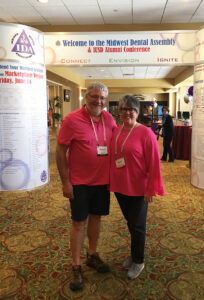
Held jointly with Indiana University School of Dentistry Alumni Association, IDA is pleased to announce that the 2021 Midwest Dental Assembly will take place at the Indianapolis Marriott Downtown, May 14-16, 2021.

As with previous conferences, the Midwest Dental Assembly will feature multiple CE opportunities, networking events, social activities and the Marketplace of vendors.

Visit our Midwest Dental Assembly page to view the schedule, speakers and registration information.

COVID-19 Webinars and CE

HomeNews2020November

If you need guidance on the quickly-changing legal and financial aspects of COVID-19, the webinars and CE events below may be helpful. NOTE: We recommend registering and signing in for live webinars early, as many events are filling quickly.

IDA is not responsible for the content presented in the events listed on this page.


On demand events

IDA Member Webinars and Updates

April 17 IDA Member COVID Update

Employment Law Podcast: 3 part series by employment attorney Joe Cohen

Isaac Knapp Dental Society Podcast on Employment Law and Federal Loans for Dentists

IDA COVID-19 Webinar for Members-April 3, 2020


ADA Webinars and Updates

Selling Your Practice in the COVID-19 Era: Advice From Experts

The Role of Aerosol on the Transmission of Coronavirus and the Impact in Dentistry

Return to Work Guidance ADA Webinar

Respiratory Protection in the Era of COVID-19

Building Resilience in Times of Anxiety and Uncertainty

Calculate the Cash Burn Rate of Your Dental Practice and Extend the Number of Days you Have Money Left in the COVID-19 Crisis

Small Business Administration Loans: Understanding the Options for Dentist Owners

What’s in the CARES Act and How It Can Immediately Impact My Dental Practice (ADA)

Keep the Lights On: Protect the Health of Your Practice During the Economic Downturn (ADA)

The Good, the Bad and the Ugly: An on-demand webinar that addresses how to identify stress, recognize the physical and mental impacts of stress, and how to manage the negative types of stress. (For ADA members only)

ADA COVID-19 Infection Control Protocols and Procedures Webinar

Dental Practice Financial Issues Surrounding COVID-19 (ADA)


Upcoming events

[MEC id=”150606″]